
Your Screenplay Shouldn't Disappear
INT. COFFEE SHOP - DAY · 2026-08-01
The Writer's Gripes — Part One
FADE IN:
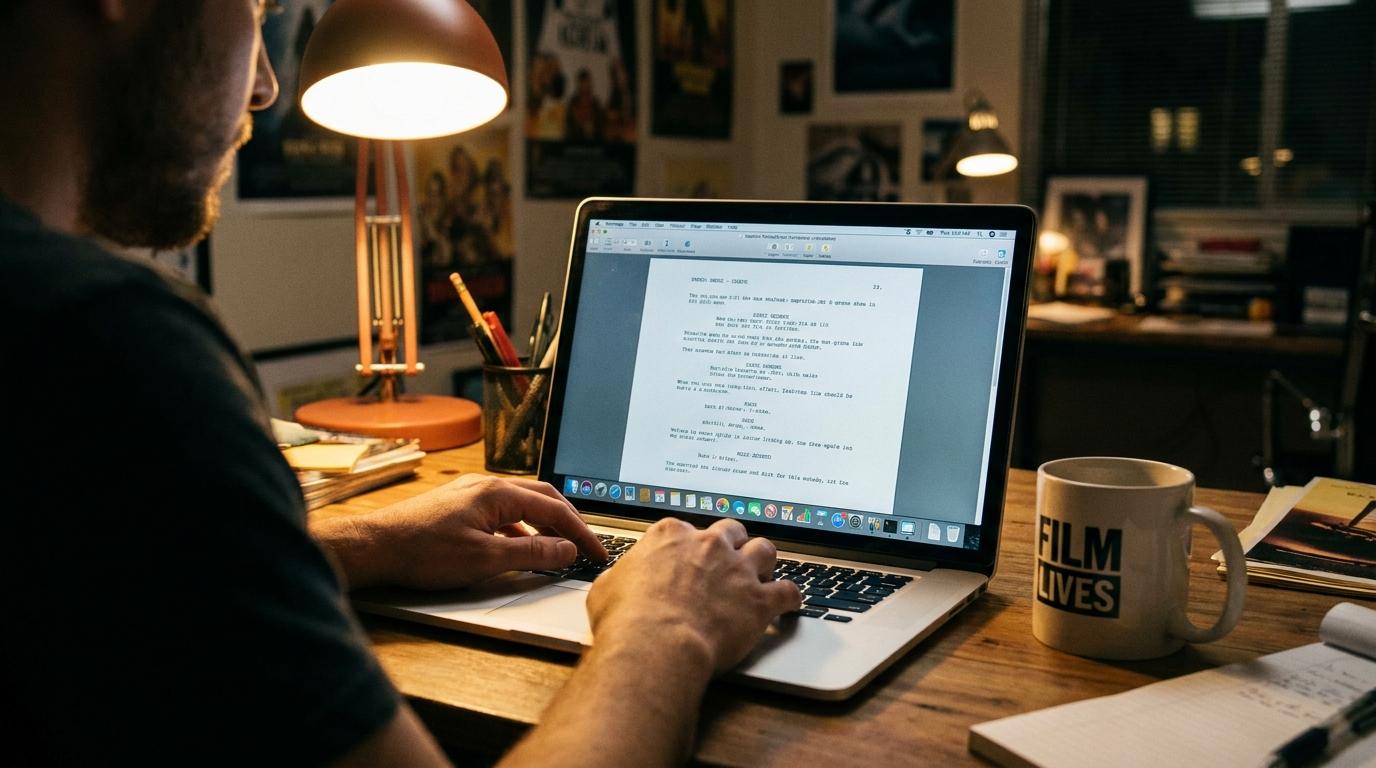
INT. WRITER'S OFFICE - 3:17 AM
A tired screenwriter stares at their laptop.
After six hours, they've finally cracked that troublesome third act.
The dialogue sings.
The ending works.
For once, even the protagonist knows what they want.
Then the software crashes.
CUT TO BLACK.
There are few things more terrifying to a screenwriter than losing their work.
Well, perhaps receiving a note that says, "I love the script, but could you completely rethink the story?"
But losing six hours of writing comes pretty close.
We've all heard the horror stories.
Lost pages. Corrupted files. Autosaves that didn't auto-save. And that particularly unpleasant moment when you open your screenplay and discover yesterday's masterpiece has somehow become last Tuesday's draft.
As a screenwriter myself, I know how much effort goes into getting a scene right.
Sometimes you can spend an entire afternoon wrestling with a single conversation.
You change a line. Change it back. Move a scene. Delete a character. Bring them back because you've suddenly realised they were rather important to the plot.
And then, occasionally, something wonderful happens.
Everything clicks.
The dialogue starts flowing, the characters begin behaving themselves, and for a brief, glorious moment, you actually feel like you know what you're doing.
The last thing you want at that point is to lose it all because your software has decided to take an unscheduled holiday.
Writing Is Hard Enough Already
I don't think it's unreasonable to expect a screenplay editor to do a few basic things exceptionally well.
Let me write.
Protect my work.
And stay out of my way.
That might sound obvious, but those three things have been at the heart of my thinking while developing ICDX, the screenplay editor I've built for INT. COFFEE SHOP - DAY.
There are some excellent screenwriting applications available, and I have enormous respect for the people who develop them.
Creating reliable software isn't easy.
I know that firsthand.
Sometimes fixing one bug reveals another three hiding behind it, presumably having a little party at my expense.
So this isn't about criticising other software.
It's about something I believe every writer should be able to expect, regardless of which application they use.
Your work should be protected.
Because a screenplay isn't just a collection of words on a screen.
It's hours, days, weeks or sometimes years of somebody's creative life.
And that deserves to be taken seriously.
The Dreaded Missing Draft
One of the things that worries me most about writing digitally is how easily we can take saving for granted.
We type away, assuming everything is being stored safely somewhere.
And most of the time, it is.
But what happens when something goes wrong?
What if you accidentally delete a scene?
What if you decide to rewrite the ending, only to discover the original version was better?
What if you make a series of changes and then realise you've somehow managed to remove the one thing that made the story work?
I've certainly had moments where I've wanted to go back to an earlier version of something.
Not because the new version was necessarily terrible.
Although sometimes it absolutely was.
But because writing involves experimenting.
And experimenting is much easier when you know you have a way back.
That's why I've made restore points and backups part of the ICDX writing experience.
I want writers to have options when they need to revisit earlier work, rather than feeling that every change is irreversible.
A rewrite should be a creative decision.
Not a leap of faith.
Quality Checks Without the Interruption
Protecting your screenplay isn't only about saving it.
It's also about helping you spot things that might have slipped through the cracks.
When I'm writing, I don't want to spend every five minutes worrying about whether I've formatted something correctly.
I want to concentrate on the characters, the dialogue and the story.
That's why I've included quality checks in ICDX.
The idea is to help identify potential issues in the screenplay without turning the writing process into an endless exercise in correcting technical details.
I don't want the software telling you how to tell your story.
That's your job.
And I certainly don't want it deciding whether your dialogue is any good.
That's a conversation for you and your readers.
I simply want it to help with the things a computer can reasonably assist with, leaving you free to focus on the creative decisions.
Because there's quite enough to think about when you're trying to get a character from the beginning of Act Two to the end of Act Three without losing the audience along the way.
Built by a Screenwriter, for Screenwriters
One of the reasons I started INT. COFFEE SHOP - DAY was that I wanted to build something I would genuinely enjoy using myself.
I'm a developer, but I'm also a screenwriter.
And that combination means I get to experience the frustrations from both sides.
As a writer, I want everything to work smoothly.
As a developer, I know there's usually a complicated reason why something doesn't.
Unfortunately, knowing the reason doesn't make it any less irritating when you're trying to finish a scene.
I'm not going to pretend that ICDX will never encounter a bug.
That would be a rather foolish promise for any developer to make.
Software evolves. Problems appear. Things need fixing.
What I can promise is that protecting writers' work will remain one of my priorities as I continue developing it.
I'll keep improving the editor, listening to feedback and working on the things that matter to the people using it.
Because I know what it feels like to spend hours writing something you're genuinely pleased with.
And I know how frustrating it would be to lose it.
The Only Thing That Should Disappear Is Your Character
Ultimately, I want ICDX to be a place where you can sit down, open your screenplay and get on with writing.
Without worrying about whether you've reached a subscription limit.
Without unnecessary distractions.
And without feeling that one wrong click could undo an afternoon's work.
I've built quality checks, restore points and backups into the writing experience because I believe those things matter.
Not because they're glamorous features.
They're not.
Nobody has ever walked out of a cinema saying, "What a fantastic backup system that screenwriter must have used."
But they're the sort of features you appreciate when you need them.
And I'd rather have them there than discover I needed them five minutes too late.
Writing a screenplay is difficult enough without your software joining the antagonist's team.
After all, the only thing that should disappear from your screenplay is the character you killed off in Act Two.
And even then, you might want to bring them back for the sequel.
FADE OUT.
Different tools. Same blank page. We're all writers here.
Steve
Developer, Screenwriter and Founder of INT. COFFEE SHOP - DAY